Design an Environment That Remembers for You
Out of sight really is out of mind with ADHD. Here’s how to use your home, desk and phone as an external memory, so the right reminder is there at the right moment.
Unfinished tasks often have no finish line. Here’s how defining “done” upfront helps ADHD brains start, stay on track and actually stop.
 I Post About ADHD··3 min read

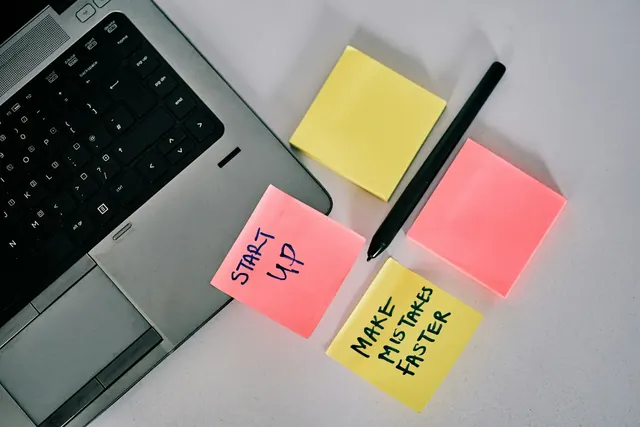
Photo: Jakub Żerdzicki on Unsplash
“Clean the house.” “Work on the presentation.” “Organize the closet.” Notice what these have in common? None of them has a finish line. With ADHD, a task without a finish line tends to either never start or never stop.
Before you start, finish this sentence:
This is done when…
Make it specific and observable:
| Vague | Done when… |
|---|---|
| Clean the kitchen | Counters are clear, dishes are in the dishwasher and it’s running |
| Work on the presentation | Slides 1–5 have titles and one sentence each |
| Organize the closet | Three bags of donations are in the car |
| Study for the exam | I’ve done 20 practice questions and checked the answers |
For tasks that tend to spiral, add a good-enough version:
This is especially helpful for perfectionism and on low-energy days.
Write “done when” at the top of the document, on a sticky note, or as the name of the task in your list. When you finish, tick it off on purpose. Notice it. That moment matters more than it looks.

This article is for education and organization, not medical advice. Read our medical disclaimer and editorial policy.

Out of sight really is out of mind with ADHD. Here’s how to use your home, desk and phone as an external memory, so the right reminder is there at the right moment.

Why switching between tasks is so hard with ADHD, and a simple “transition bridge” that makes moving from one thing to the next smoother.
Why starting is the hardest part with ADHD, and a simple method for shrinking any task until starting feels almost too easy.

A short visual guide in your inbox: one problem, one system, one small step you can try today. No spam, no shame.
We use analytics cookies to understand how visitors use our site. Functional cookies (session and page variant) are always set. See our Privacy Policy.